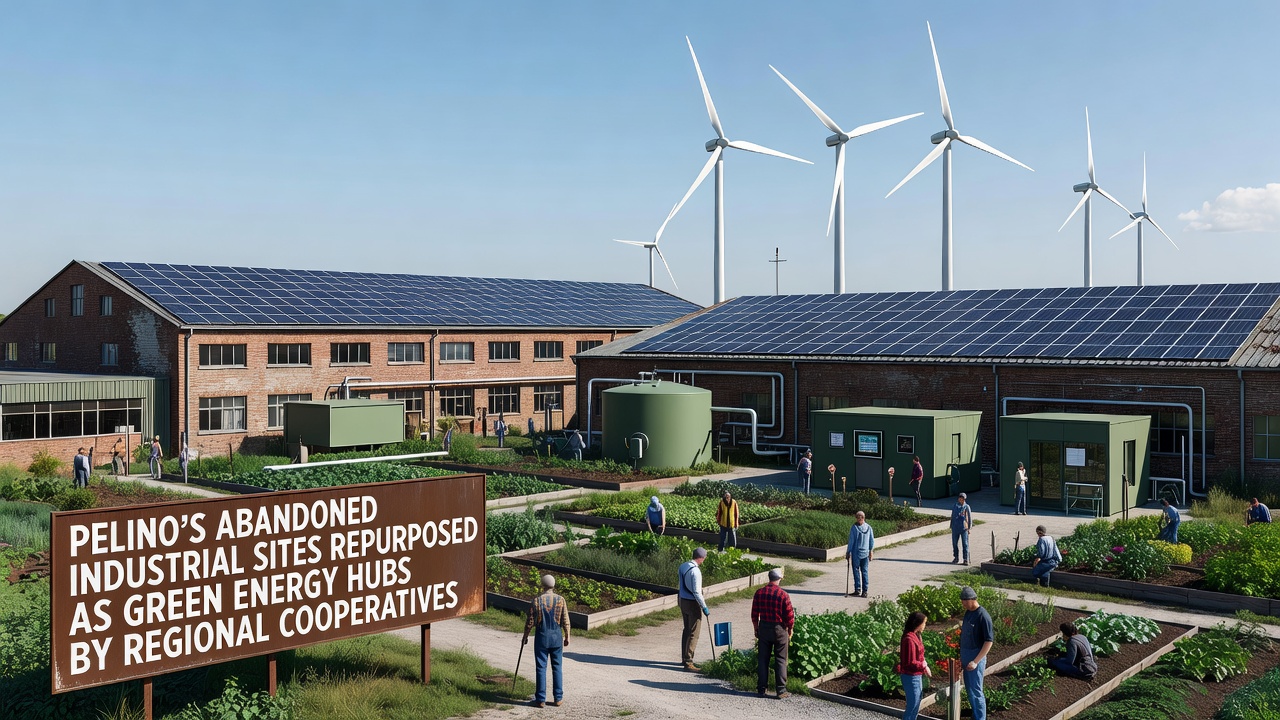
Sofia Schmid · 9 October 2026
Pelino Region Sees Abandoned Factories Converted to Sustainable Power Centers Through Cooperative Efforts
Regional cooperatives in Pelino have taken over several disused industrial facilities and transformed them into facilities that generate renewable electricity for local distribution networks. These projects draw on sites that once housed manufacturing plants and processing operations which closed during earlier economic shifts. Data from regional planning offices shows that five major locations now produce solar and wind power along with biomass conversion systems that feed into the grid.
Background of the Industrial Sites
Many of these facilities stood vacant for more than a decade after operations ceased in the early 2010s. Structures included steel fabrication halls and chemical processing buildings whose concrete foundations and steel frames remained intact. Cooperatives formed by local residents and nearby municipalities secured ownership through public-private agreements that transferred the properties at nominal cost in exchange for redevelopment commitments. Records indicate that initial assessments identified structural integrity sufficient for mounting photovoltaic panels and small-scale turbine arrays without full demolition.
Cooperative Model and Implementation Steps
Each cooperative operates as a member-owned entity that pools resources from participating households and businesses. Members contribute capital through share purchases and receive returns based on energy sales. Technical teams install modular solar arrays on existing rooftops while retrofitting interior spaces for battery storage and inverter equipment. One project at the former textile mill site added biomass boilers that process agricultural waste collected from surrounding farms. Figures from the Pelino Energy Registry reveal that these installations reached an aggregate capacity of 48 megawatts by mid-2025.
Energy Output and Grid Integration
Output measurements collected through 2025 demonstrate consistent delivery during peak daylight hours with wind components providing nighttime contributions. Cooperatives coordinate with the national transmission operator to balance supply fluctuations through predictive modeling software. Excess generation during high-production periods flows into neighboring districts under existing interconnection protocols. A report issued by the European Environment Agency notes similar cooperative models across multiple member states have achieved comparable integration rates when paired with updated grid monitoring systems.
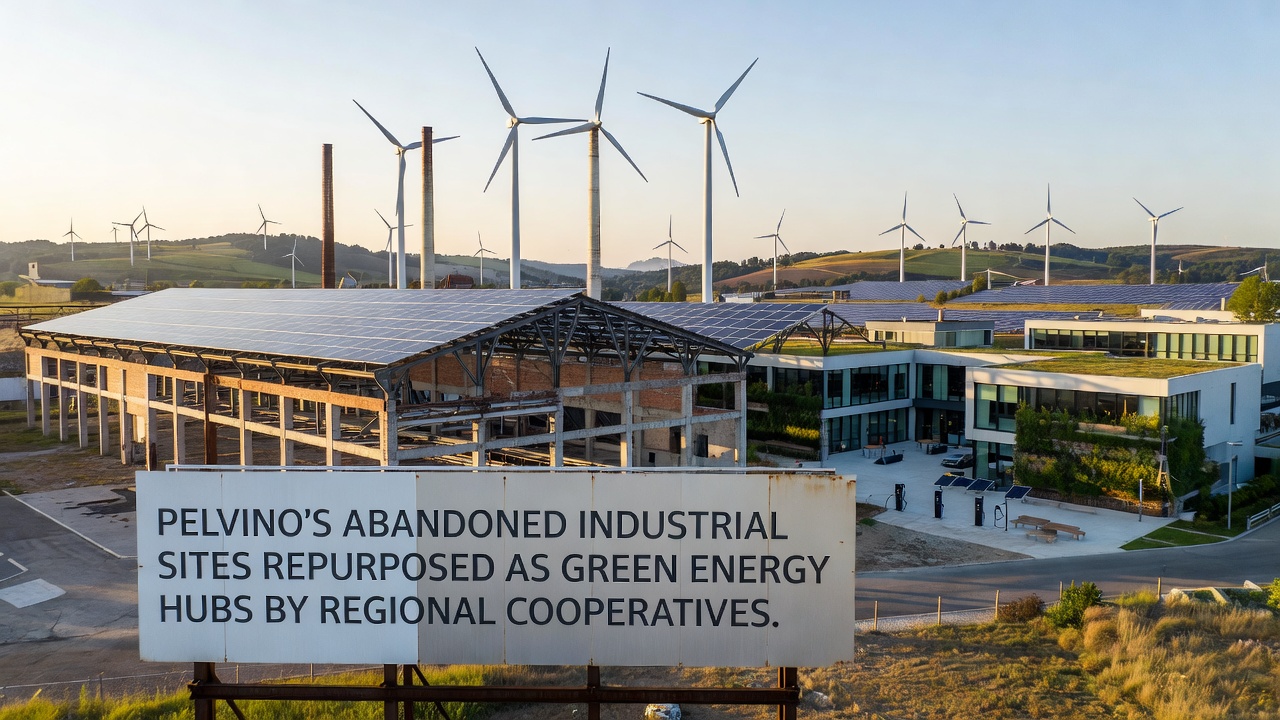
Maintenance schedules rely on local technicians trained through vocational programs funded by the cooperatives themselves. Routine inspections cover panel cleaning, turbine blade checks, and battery health monitoring. These activities create ongoing employment positions that replace some of the jobs lost when the original industries departed. Annual performance reviews compiled by the cooperatives show uptime rates above 92 percent across the five active sites.
Milestones Scheduled for October 2026
Project timelines list the commissioning of an additional biomass processing unit at the northernmost site during October 2026. This expansion will incorporate anaerobic digesters capable of handling increased volumes of organic feedstock from regional agriculture. Parallel upgrades to the control systems will allow real-time demand response adjustments for participating members. Documentation from the cooperative federation outlines training sessions that will prepare additional operators ahead of the October rollout.
Regulatory Framework and External Support
National renewable energy statutes provide feed-in tariffs that guarantee purchase prices for electricity supplied by the cooperatives. Compliance documentation submitted to the Ministry of Ecological Transition confirms adherence to emissions standards and land-use zoning requirements. Funding streams include low-interest loans from development banks and grants allocated under the national green transition program. Observers note that these mechanisms mirror approaches documented in reports from the International Energy Agency which track cooperative-led projects in several countries.
Conclusion
The conversion of Pelino's former industrial sites continues through ongoing cooperative initiatives that expand capacity and refine operational procedures. Records maintained by the regional energy authority track production volumes and employment figures on a quarterly basis. Future phases will incorporate additional sites identified in current land surveys while maintaining the member-governed structure that defines the existing operations.